I watched this a while back and I just had to share it. Studio C is big in Utah but I'm pretty sure most of my non-Utah friends haven't seen it. Take the time to watch it. It's SO worth it!!!
Angie
Showing posts with label plot. Show all posts
Showing posts with label plot. Show all posts
Wednesday, March 19, 2014

Monday, October 22, 2012
Something Borrowed…
Have you heard
the thought—“There are no new plots”? I know we all have. Plots are recycled.
There is the Quest Plot, the Coming of Age Plot, the Monster in the House Plot…I
could go on and on.
If the plots are
all old, what makes your story yours? It’s the characters and the world you put
them in. Simple as that. If you can make your characters and worlds interesting
and stick them inside a tried and true plot you are golden.
 So I have a
question and I want you all to be honest with me. Have you ever knowingly borrowed a plot? My good friend Katie
Purdie wrote in a post a week ago that Shakespeare did it all the time.
So I have a
question and I want you all to be honest with me. Have you ever knowingly borrowed a plot? My good friend Katie
Purdie wrote in a post a week ago that Shakespeare did it all the time.
I’ll come clean
:) Something new that I’m working on I’ve used the skeletal form of another
book I loved the plot of. Unless you were highly observant and you knew what to
look for I don’t think you would ever be able to tell.
What about you? Ever borrowed a plot? Be
honest.
-Angie
Wednesday, February 29, 2012
Crafting Corner— “MICE”
I’m
currently reading Life of Pi. Everyone raves about this book—but I’m
struggling. I keep looking for the PLOT, but it refuses to be found. Maybe it
is still floating on the ocean :)
When
I read books that I find boring or slow it really helps me to remember—all
books are not constructed with the same emphasis on plot. I came across this
idea while reading Characters and Viewpoints by Orson Scott Card.
 There
are 4 types of story factors. Each of these factors are present in every story,
but one will usually take prominence. Card has an acronym to help us remember
these factors: MICE.
There
are 4 types of story factors. Each of these factors are present in every story,
but one will usually take prominence. Card has an acronym to help us remember
these factors: MICE.
M—Milieu
I—Idea
C—Character
E—Event
Milieu—In a Milieu story
the setting or world takes prominence. The world becomes another character. The
way the characters interact with the setting dramatically affects the story. If
you take the characters away from the world the story falls apart.
Example: Lord of the Rings and Gullivers
Travels.
Idea—A question is always
posed at the beginning of an Idea story. The entire point of the story is to answer
this question. Mysteries and thrillers are Idea stories. These stories generally
get a reputation having weak characterization, but the point of this kind of
story is not the characters, it’s the idea.
Example: Agatha Christie and Dan
Brown
Character—Literary fiction almost
always falls into the category of a Character story. In this story
character is KING! Character arch can replace the plot. The point of the story
is the characters journey.
Example: To Kill a Mocking Bird and
The Road
Event—In this type of story one
event is usually the catalyst for the entire story. The world is out of balance
somehow and the point of the story is to right this wrong. The Event stories
drips with plot.
Example: Hunger Games and Harry Potter
Great
stories will have a little of all these factors, but one is usually more prominent
than the others. If you are struggling with a story maybe it is because you
aren’t crazy about its main factor. I know I’m more drawn to event stories than
any other kind.
What about you? Do you
write: milieu, idea, character, or event stories? Which is your favorite to
read?
-Angie
Wednesday, November 16, 2011
Mid-Point Reversal

It’s
mid-point through NaNoWriMo. How is the writing going? Great I hope!
I
thought the middle was the perfect place to talk about the mid-point reversal.
It is what keeps your middle from sagging.
The
mid-point reversal should be just that a reversal. A reversal of your
characters luck. A reversal of your reader’s expectations. A reversal that
shocks us. A reversal that changes the
direction of your story. A reversal that reveals a secret.
Don’t
know where to start? Ask yourself a few questions?
- What is the worst thing that could happen?
- Is there a secret that could throw us?
- What could happen to make your antag give up?
- How could the antag get the upper hand?
- What is something your protag needs to know to win in the end?
- Is there a twist to send the story in a new direction?
In
my first MS the mid-point reversal is actually positive. My characters get help
in an unexpected place. And that surprise is what changes the course of the
story. So it doesn’t need to be negative—just twisty.
Famous
mid-point reversals (well semi famous):
- Pride and Prejudice—Darcy proposing to Elizabeth.
- The Hunger Games—Katniss finding out she and Peeta can team up in the hunger games.
- Twilight—Edward confesses his feeling for Bella.
- The Sorcerer’s Stone—Harry finds out Voldemort is looking for the Sorcerer’s Stone.
Notice
how in each of these examples the reversal changes the trajectory of the story.
Good
luck with your middle, and happy NaNoWriMo!
-Angie
Thursday, October 6, 2011
A 6 Year Old’s Perspective on Stories
Yesterday my 6 year old daughter flops down next to me on the couch and we have a conversation that goes something like this. (I’m going to call her Sister Bug, because that's her real nick name :)

Sister Bug: Mom, I have a book to read to you.
Me: Okay, lets hear it.
Sister Bug: I can read all the words. I can probably read them better than you.
Me: Probably.
Sister Bug: First before we read, you need to know how stories work.
Me: *holding back a smile* Okay, why don’t you tell me.
Sister Bug: First you need to know the characters and setting. Then the characters have a problem. This very important. Every story has a problem. If there isn’t a problem—it isn’t a story. Do you understand?
Me: I think I’ve got it. You are very smart.
Sister Bug: I know. Then at the end they fix the problem, and that is it. Are you ready now?
Me: Yep, lets hear it.
As she read to me I was only half paying attention. I was impressed with her simplistic grasp of plot. I know writers that struggle with this “very important” problem part. If your characters are wandering around in your story not doing much but admiring your world building skills and killing time, maybe they need a problem to wrestle with :)
-Angie
Monday, October 3, 2011
What Writing “Feels” Like

A friend of mine asked me recently, “What does it feel like to write?” This question caught me off guard. How do you explain what it feels like to breathe? But I’ve realized that most people don’t love writing (just like I don’t love math :) They are genuinely curious what the process is like.
Every writer is different, but this is what writing “feels” like to me. At the very best of times writing feels like—remembering. It is simply recalling words that are already written on my mind. They flow easy and effortlessly. There is no force, no effort, no struggle. Only the absoloute perfection of knowing you are writing exactly what you mean to say.
At the worst of times it “feels” like trying to turn water into wine. The words fight me at every turn and refuse to perform how I envision. It is at these times that I pull back.
When the words or the story fight me I have to wonder—Am I taking my story in a direction it doesn’t want to go? Is my story already complete and just waiting for me to get back on track so I can remember it again? Sometimes I really think that my story really is already created somewhere in my psyche, and it is up to me to remember it.
What do you think? Do you ever feel like you are remembering your story?
-Angie
Thursday, August 25, 2011
Writing for Boys
I woke my kids up for school and as they come stumbling up the stairs I notice my 10 year old has a book in his hand (The Shifter by Janice Hardy). After we get the regular morning stuff done, he sits on the couch and starts to read. What is it that made him read for an hour before school started?
Do you write MG or YA? Do you think about the boys who will read your books? Do you know what they like in a book? Do you know what they hate?
I have access to 2 tween boys—who are avid readers and I thought I would share their minds a bit with you.
Here they are disguised in their Halloween costumes from last year. Napoleon Dynamite is 12 and in 7th grade and Scary Goblin is 10 and in 5th grade.

Me: What is your favorite book series and why?
Napoleon: Pendragon (by D. J. McHale) – It has tons of twists. It has suspense and romance. Action—lots of it. It’s funny and Bobby talks like a teenager.
Scary Goblin: Fablehaven (by Brandon Mull) – because I like the fantasy, adventure and how creative it is.
Me: Why do you stop reading a book?
Napoleon: Well, because things don’t happen as quickly as I think they should. They are boring because nothing happens. There should be at least something cool in every chapter.
Scary Goblin: Sometimes it feels too long, or you are just not into anymore because it is too long.
Me: What will make you stay up late at night reading ?
Napoleon: Probably if it’s good and really awesome. I get worried about the character so I need to know what happens. I’m reading and something pops up and then something else pops up and I need to know how it ends.
Scary Goblin: Sometimes comedy and adventure. I like the plot and the twists and stuff. Sometimes I can’t sleep.
Me: What is a mistake some authors make when writing for boys?
Napoleon: You need to have girls in the story too. Kind of to go along with the main character. Sometimes the book is too slow. I don’t like that.
Scary Goblin: Too much romance and not enough excitement.
Me: (I’m a little unsure what Scary Goblin is reading)
Me: If you could tell authors anything what would say.
Napoleon: There should be a little bit of romance in every book. Someone needs to do some action. Also books need to be a little bit funny. Make the main characters likeable.
Scary Goblin: Put a lot of excitement in your book. And at least one scary guy.
Napoleon: And lots of romance.
Scary Goblin: No, dude. No more romance or kissing.
There you have it (even with the conflicting romance answers :) If you have any questions you are dying to know the answer to, post them in the comments and I will ask my boys.
I’ve always believed love of reading is a matter of exposure. Since my boys were small we’ve read together. Once they were bigger I started to read chapter books to them at night. It took time and many nights I didn’t want to do it, but reading became an activity they looked forward to with anticipation. I figure I’ve read over 40 chapter books to my boys over the last 8 years.
So my advice to parents of boys (and girls)—READ! Expose them to books no matter how old or young they are :)
-Angie
Saturday, August 20, 2011
Editing Celebration

Hip Hip Hooray! I finished line editing my 92,823 word MS!!!!! I’ve been working on it for six months. It takes a long time to go through that many words.
I don’t really know what to do with myself now. I guess I should start working on the next WIP, but I want to take a little break and CELEBRATE!
So while editing is on my brain this is how I edit.
- Macro Edits—Plot Holes, Set Pieces, Beginnings, Endings
- Mid Edits—Pacing, Flow, Dialogue, Characterization, Themes, Symbolism
- Micro Edits—Punctuation, Adverbs, Tags, A close look at every—single—word.
How do you approach editing? I would love to know. Got any great tips?
-Angie
Wednesday, July 13, 2011
Plot Device
This video was on Agent Kristen Nelson's blog last tuesday. It was so funny I couldn't stop laughing. So for all of you who didn't see it I thought I would share :)
"Did you know sharks can live outside the water for five years." - I learn something new everyday.
-Angie :)
Plot Device from Red Giant on Vimeo.
"Did you know sharks can live outside the water for five years." - I learn something new everyday.
-Angie :)
Friday, July 8, 2011
Bones of my Story
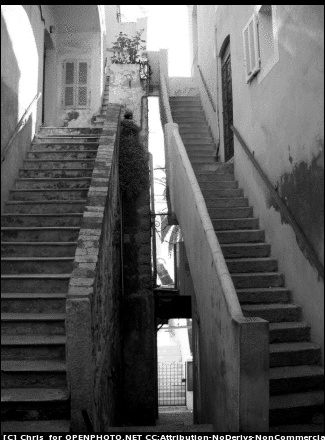
We moved from Boise about four years ago. We sold our home by ourselves and so I spoke with many of our prospective buyers. Without fail they all told me that our house had 'good bones' but it wasn't the right fit. Not all of them said it exactly like that, but that was the basic gist of the conversation.
Our house was built well...good foundation, solid roof, intelligent design. But even with all those factors in place, they still walked away. Maybe we were asking too much, or maybe it was the crash of the stock market. Probably both.
I've wondered about the bones of my story, my novel. How is the design? Have I crafted it with a solid structure? Have I painted a realistic and viable back story? Have I covered all the plot points, patched up any holes?
And last, but not least...Do my characters want to live here? Why? What sets my story structure apart from all the others on the market? Does my design suit my protagonist? My antagonist? Will it showcase and provide a large enough stage for my conflict?
Are the bones of my story strong enough to support some dramatic blows? Could it withstand a few stretches of imagination? The windows might rattle, and the pipes might leak...but by the final chapter, after all the twists and conflicts, will my story be standing?
I've been reading Story Engineering by Larry Brooks. It's one of those books that I read, and re-read, make notes, and then read once more. It has several levels to it and each time I flip through it, I feel like I get a new insight from it.
One of Larry's main points is: your story must have the organization, strength and basic architecture to support all of your themes, characters, plot twists, conflicts, etc. Basically, does your house have good bones?
I'm doing some renovation of my story. I think it has all of the right elements, but I discovered, with the help of my writing partners, that there are a few cross beams missing, or maybe a few tiles on the roof need repair. Who knows, after the repairs are made, I may throw out an extra wing, or put in a skylight. Who knows. Whether it's a cabin or a cathedral, by the time I type the last word, I want to proudly pronounce, 'This house has good bones.'
Monday, June 13, 2011
False Choices
 I’m currently reading a book by a well known author (Newbery Honor Award Winner) and—I don’t like it.
Gasp. I know. It feels like blasphemy saying that.
So I started to analyze what it is about the book that isn’t getting me excited, and I’ve figured it out—false choices.
Every choice the heroine makes isn’t really a choice. Die or fight—of course she will fight. Save her family or save herself—unless she's totally selfish the choice is obvious. I could go on and on.
I can see every twist and turn and I know every choice the heroine will make—it is so boring.
So what I take away from reading this is that the choices we give our characters need to be real choices. I think instead of a choice between good and bad, how about a choice between good and good or even better—bad and bad!
I’m going to look at my story and see if I have crafted real choices.
-Angie
Monday, June 6, 2011
Wrangling problem paragraphs

I told Sara that trying to wrangle an unruly paragraph is exactly like herding cats—you want it to go in a certain direction and it wants to go in another. Right now I have a problem paragraph that refuses to let me control it.
So what should I do? Let it sit for a day or two? Keep forcing it? Resort to violence if necessary? These are the steps I use to try and control wild paragraphs.
- Does it do what I want it to?
- Is there sloppy language?
- Is it confusing to readers? Why?
- Does it make sense in context to the scene?
- Is there a better way to say what I want to say?
If the answer to the last question is yes, then I try a rewrite. If the rewrite is better I may use it or try and merge it with the problem paragraph. But sometimes you have to cut it altogether—drive all the cats off a cliff and start over with dogs—so to speak J.
-Angie
Thursday, June 2, 2011
The GREAT What If Game

Most of the time plot is easy for me. My first manuscript practically wrote itself. But now as I work on my second manuscript I find the plot elusive as smoke when I try and grab hold. This problem gives me the dreaded-writers block, because I don't know where the story is going. (My writers block is so bad I would rather do edits on my first MS- shudder)
So I'm trying a little exercise that writers have always done: the great what if game.
Here is how you play. Ask yourself - what if? over and over until you have a great plot.
- What if your hero slips up and gives information to to the bad guys?
- What if an important character is kidnapped?
- What if your hero and heroine have a misunderstanding that changes their relationship?
- What if an escape plan is foiled?
- What if a character you thought you knew is someone else entirely?
You get the idea. I plan on doing this exercise until my smoky plot suddenly becomes solid. Then I am going to write the heck out of it :) Wish me luck.
-Angie
Friday, May 20, 2011
Set Pieces
 Last month I read a book called: PLOT by Ansen Dibell. It was fascinating. I learned so much. I marked it up with so many highlighted sections. If you have a chance to read it DO!
One of the most useful things I learned was how to use SET PIECES in your writing.
SET PIECES are big moments in your story. Almost like mini-plots within your main plot. They move your main plot along.
Stories should: build, build, build to a set piece, resolve and leave a question that makes the reader want to continue. This should repeat multiple times
in a story until the final resolution. I will try to use an example that everyone should know:
HARRY POTTER AND THE SORCERER’S STONE
Start: Harry is left as a baby.
Build
Build.
Set Piece: Harry finds out he is a wizard.
Resolution: He gets to leave the Dursleys
Question: What does he do now? Why is he famous?
Build.
Build.
Build.

Set Piece: Sorting ceremony.
Resolution: He is put in Gryffindor
Question: Why not Slytherin?
Build
Build
Build
Set Piece: Harry finds out about the Sorcerer’s Stone
Resolution: Harry’s friendship with Ron and Hermione is solidified.
Question: How do they save the stone?
Build
Build
Set Piece: Voldemort is looking for the stone too.
Resolution: Dumbledore will protect the stone.
Question: How can Harry help?
Build.
Build.
Set Piece: Harry, Ron, and Hermione go after the stone.
Final Resolution: Harry saves the stone and his friends.
This is extremely simplified. You can have many SET PIECES in your book. They are a great way to move your plot along and keep your story from sagging in the middle.
Obviously during the building parts you layer in your characters, world building, sub-plots, back story, and motivations.
Learning about Set Pieces made me understand how better to construct my story. Again if you want to learn a ton read: PLOT by Ansen Dibell.
Happy Writing J
-Angie
Tuesday, May 17, 2011
How writing is like Interior Design
In college I majored in History and Interior Design (funny combo I know). I should have majored in Lit because those are the classes I took for fun. But I don't think my Interior Design knowledge is watsed, because I believe creating an amazing story and creating an amazing room are the same.
For the sake of argument I belive this metaphor applies to fiction - poetry, non-fiction, and memoirs are different beasts.

Room = Plot : Every room needs a floor, walls, ceiling. Without those things there is no room. Same goes for a story. Every story needs a plot. Without a plot we wander aimlessly around never doing or accomplishing anything. All rooms are basic, just like all plots are basic. It is what we put in them that make them special.
Wall Color = Voice : You can put a million things on walls: paint, paper, fabric, wood, brick, etc. Each thing and color brings a different feeling to the room. Voice is the same, poetic, funny, or snarky. Every kind of voice encirles the story setting the tone, pace, and mood. You would never paint a country living room royal purple...it is the wrong voice.
Furniture = Characters : One rule of interior design is NEVER use sets of furniture. Your couch and chairs should never match. Find pieces that are different but coordinate and

compliment each other. Same goes for characters. They should be so different from each other that even their dialogue can't be confused. Just like perfectly paired furniture adds depth to a room, perfectly paired characters do the same: solid stable character (like a couch) set against a fragile flighty character (spindly wingback chair) contrast each other and make a story/room interesting.
Furniture Placement = Scene Selection/Pacing : The three foot rule (there should be three feet of walking space around furniture) is used in interior design to keep a natural flow in a room. You would never take all your furniture and push it into a pile in the middle of the room - that's weird. Where you place your scenes and what the pace of your story is effects how readers move through your story. Place your scenes well and the story flow is natural. Another thought - you would never stick a fridge in your living room. A fridge is a great piece of furniture, but in the wrong place it doesn't work. Sometimes we hang onto scenes we like but don't work...put the fridge back in the kitchen, you will be glad you did.
Lighting = Mood : Well placed lighing in a room makes all the difference and sets the mood for your room: bright, eerie, sad, friendly. Mood can even be used to spotlight something important in your story. Throw a spotlight on it- so to speak.

Accessories = Details we LOVE : Throw pillows, rugs, art, mirrors, etc...these are the first things we notice in a room. They add intrest, spice, or comfort. Accessories are just like the details we add to our story to make it pop. New worlds, interesting settings, magic, etc. etc. If you took all the accessories in your room and put them on your lawn they would lose all their interest. Accessories need the context of a room, wall color, furniture and lighting to be their best. Same goes for a story without the context of structure; the details that make our story pop are meaningless.
Wow, that felt a little rambleing. I hope it made sense. I really believe that everything that is creative relates to each other.
Angie
Subscribe to:
Posts (Atom)
